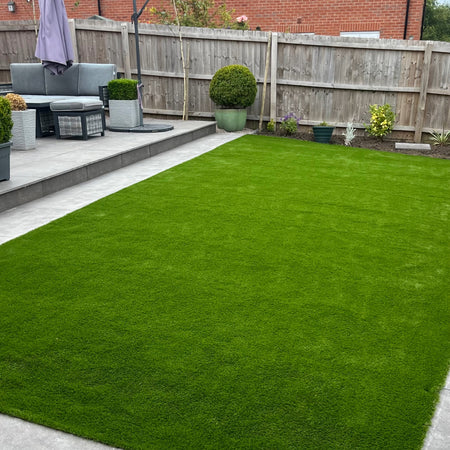
One of the biggest advantages of artificial grass is how well it handles water. In the UK, where rain is frequent and unpredictable, proper drainage can make the difference between a usable garden and a muddy mess.
Understanding how artificial grass drainage works will help you choose the right setup and get the best long term performance from your lawn.
Table of Contents
- What drainage means in artificial grass.
- How water drains through artificial grass.
- The role of the sub base.
- Common drainage mistakes to avoid.
- How to ensure good drainage in your garden.
What Drainage Means in Artificial Grass
Drainage in artificial grass refers to how efficiently water passes through the surface and into the ground below. Unlike natural grass, which can become waterlogged, artificial grass is designed to move water away quickly.
Drainage matters because:
- It prevents puddles forming on the surface.
- It keeps the lawn usable after rain.
- It reduces the risk of mud and mess.
Good drainage ensures your garden stays functional in all weather.
How Water Drains Through Artificial Grass
Artificial grass is built with a perforated backing that allows water to pass through easily.
Water drains effectively because:
- Small holes in the backing let water flow through.
- The surface does not absorb moisture.
- Rainwater moves evenly across the lawn.
This design helps the grass dry quickly after rainfall.
The Role of the Sub Base
The sub base is just as important as the grass itself when it comes to drainage. Without a proper base, water has nowhere to go.
A good sub base supports drainage by:
- Allowing water to disperse into the ground.
- Preventing pooling beneath the surface.
- Keeping the lawn stable and level.
A well prepared base ensures long term performance.
Common Drainage Mistakes to Avoid
Poor installation can affect how well artificial grass drains.
Mistakes to watch out for include:
- Installing directly onto soil without a base.
- Using the wrong materials underneath.
- Not levelling the surface properly.
Avoiding these issues helps maintain a clean and dry lawn.
How to Ensure Good Drainage in Your Garden
Getting drainage right starts before installation.
To improve drainage:
- Ensure the ground is properly prepared.
- Use a suitable sub base material.
- Check that water can flow away from the area.
Taking these steps helps your artificial grass perform at its best.
A Lawn That Stays Dry and Usable
Artificial grass drainage is what keeps your garden clean, dry, and ready to use after rain. With the right setup, you can avoid puddles and enjoy a low maintenance outdoor space all year round.